The Narwhal Icon: Capturing Arctic Magic in Design
There is something undeniably magnetic about the narwhal. Often called the unicorn of the sea, this marine animal brings a sense of mystery and majesty to the deep. When you translate that energy into a visual asset—specifically the Narwhal Icon—you gain more than just a picture of a whale; you capture a symbol of exploration, uniqueness, and resilience. For designers, marketers, and content creators, using an underwater wildlife symbol isolated on a white background offers a clean, versatile foundation for almost any project. Whether you are working with an EPS vector, a high-resolution JPG, a scalable SVG, or a transparent PNG, this asset is about bridging the gap between nature and modern digital communication.
Visual Characteristics and Personality
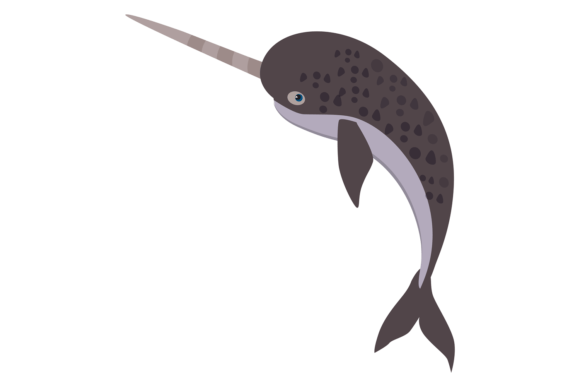
The appeal of a well-designed narwhal icon lies in its balance of detail and abstraction. In a professional icon set, you rarely see photorealistic textures. Instead, you look for the essential shapes: the streamlined body, the distinct flippers, and, of course, the iconic tusk. A high-quality marine animal icon isolates these features, removing the chaos of an underwater environment to let the subject speak for itself.
Personality-wise, this icon carries a "cool" factor. It is playful enough for a children’s brand but sleek enough for a tech startup or a sustainable fashion line. The style usually leans towards modern typography aesthetics—flat design, geometric precision, and bold lines. This makes it a perfect match for sans serif typefaces that value clarity and minimalism. However, because the narwhal is an organic creature, it also pairs surprisingly well with script fonts or handwritten fonts if you are going for a whimsical, artisanal vibe.
The visual weight of the icon changes based on the file format. A transparent PNG is essential for web overlays, allowing the narwhal to float over background images or videos without a white box blocking the view. An SVG or EPS file is your go-to for logo design and large-scale print design, ensuring that the curves of the whale remain crisp whether printed on a business card or a billboard.
Strategic Applications in Branding and Marketing
As a brand strategist, I often advise clients to look for symbols that tell a story without words. The Narwhal Icon does exactly that. It suggests depth, intelligence, and a connection to nature. This makes it an incredibly powerful design asset for specific industries.
For eco-friendly startups, this icon serves as an immediate visual shorthand for environmental stewardship. For educational platforms or publishing houses, it evokes curiosity and learning. Even in the corporate world, a stylized narwhal can act as a mascot that softens a company's image, making a brand identity feel more approachable and human.
Consider how this asset fits into your broader visual hierarchy. Because the narwhal has a distinct silhouette, it works exceptionally well as a standalone mark or a favicon. In packaging design, a small narwhal icon can act as a seal of quality or a whimsical accent that catches the eye on a crowded shelf. For social media graphics, the icon can be used as a watermark or a profile picture that stands out in a sea of generic selfies and corporate headshots.
Furthermore, the underwater theme allows for creative color play. While the icon is often presented in black or grey on a white background for versatility, it invites customization. You can easily map brand colors onto the vector shape, turning the marine animal into a vibrant pink for a bakery or a deep navy blue for a financial firm. This flexibility is what separates a standard clipart from a premium font or asset ecosystem.
Practical Guidance for Implementation
Integrating a new visual asset into your workflow requires more than just downloading the file. You need to ensure it fits your design assets library and serves your project's goals. Here is how to approach the Narwhal Icon practically:
- Evaluate the Style: Look at the line weight of the icon. Is it bold and chunky, or thin and delicate? If you are using a heavy serif font for your headers, a thin-line icon might look lost. You want visual balance. If your brand uses a sans serif font with medium weight, look for an icon that matches that stroke width.
- Check Scalability: Always test the SVG or EPS version. Zoom in to 400%. Do the lines remain sharp? For web design and responsive layouts, scalability is non-negotiable. You need an icon that looks good on a 4K monitor and a mobile screen alike.
- Test Font Pairing: Place the icon next to your primary typeface. A narwhal has a lot of curves, so it often contrasts nicely with geometric, blocky fonts. Conversely, it can harmonize with rounded, friendly typefaces. Avoid overly ornate or "frilly" fonts that might clash with the icon's streamlined nature.
- Review Licensing: This is the most overlooked step. If you are using this for commercial font or asset projects—meaning you are selling a product or a service—you must ensure the license covers commercial use. "Isolated on white background" assets are often sold under standard licenses, but if you are creating a mass-produced t-shirt or a software interface, double-check the terms.
Enhancing Audience Engagement
Why does a simple drawing of a marine animal matter so much? Because in the digital age, attention is currency. We process images 60,000 times faster than text. When a user lands on your site or picks up your brochure, the Narwhal Icon acts as a pattern interrupt. It breaks the monotony of text-heavy layouts.
In editorial design, using an icon to break up long-form content can improve readability. It gives the reader's eye a place to rest. In digital marketing, icons help categorize information. You might use the narwhal to represent a specific category in your blog navigation or a specific service in your pricing table.
Ultimately, the Narwhal Icon is more than just a picture of a whale. It is a versatile tool for visual communication. It bridges the gap between the wild beauty of the ocean and the structured world of modern typography. By choosing the right file format, respecting the visual style, and pairing it with complementary typefaces, you can turn this simple marine animal symbol into a cornerstone of your creative identity. Whether you are a crafter making stickers or a marketer