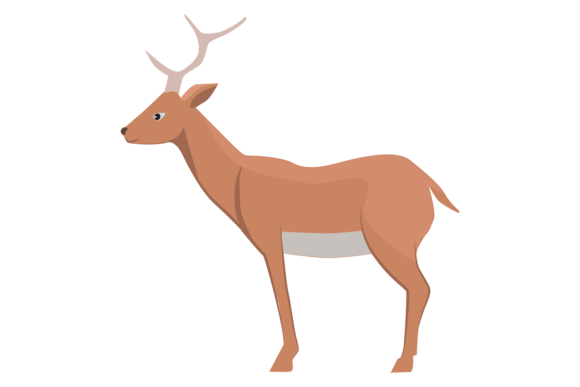
Deer Icon: Adorable Forest Animal for Woodland Designs
When you need to instantly communicate a sense of gentle nature, woodland charm, or rustic innocence, few elements work as hard as a well-crafted illustration. The Deer Icon—specifically the cute forest animal design isolated on a white background—is a versatile asset that goes far beyond simple decoration. This vector-based illustration captures the essence of the forest in a single, friendly silhouette, making it a staple for designers ranging from indie crafters to established branding agencies. It isn't just a picture of a deer; it is a visual shorthand for warmth, wildlife, and the outdoors.
Visual Characteristics and Style
At its core, this design asset is defined by its simplicity and charm. Available in standard formats like EPS, JPG, SVG, and transparent PNG, the icon is designed for maximum flexibility. The visual style typically leans toward "kawaii" or modern flat design, characterized by clean lines, soft curves, and minimal internal detail. You won't find hyper-realistic fur textures here; instead, you get a stylized representation of a forest animal that feels approachable and friendly.
The personality of the Cute Forest Animal icon is undeniably soft. It often features large eyes or a gentle pose, evoking a sense of innocence that appeals to a broad demographic. Because it is isolated on a white background, the negative space is maximized, allowing the designer to drop this asset into any environment without worrying about clashing backgrounds or complex masking. Whether you choose the vector EPS for infinite scalability or the transparent PNG for quick drag-and-drop web use, the integrity of the design remains intact. This is a premium-quality asset that bridges the gap between professional illustration and accessible art.
Strategic Applications in Branding and Marketing
Understanding where to deploy the Woodland deer icon is key to getting a return on your design investment. This isn't just for children's book covers; it has a sophisticated place in modern market trends.
For Entrepreneurs and Small Business Owners: If you run a business related to organic products, sustainable goods, children’s apparel, or outdoor gear, this icon is a natural fit for your brand identity. It serves as an excellent mascot or secondary logo element. Imagine this deer icon stamped on packaging design for handmade soaps or printed on the care labels of a knitwear brand. It instantly tells the customer, "Our product is gentle, natural, and crafted with care."
For Digital Marketers and Content Creators: In the realm of social media graphics, attention spans are short. A cute, recognizable icon acts as a visual anchor. You can use the SVG format to ensure the icon loads lightning-fast on your website without pixelating on high-resolution screens. It works beautifully as a recurring motif in blog headers, a favicon for a nature-themed travel blog, or a sticker element in Instagram Stories.
For Crafters and Hobbyists: The utility of the transparent PNG format cannot be overstated for the DIY community. If you are creating custom stationery, wedding invitations with a rustic theme, or decals for tumblers, the isolated nature of the asset means you can layer it over complex floral patterns or wood-grain textures without needing advanced skills in Adobe Photoshop or Illustrator.
Influence on Design Hierarchy and User Engagement
Integrating a graphic element like the Deer Icon influences more than just aesthetics; it affects how your audience reads and interacts with your content. In editorial design and web design, icons break up text-heavy pages. They provide a resting point for the eyes and can guide the user’s gaze down the page.
Using this cute forest animal creates an emotional hook. Psychologically, humans are drawn to faces and recognizable animal shapes. By placing the deer icon near a call-to-action (CTA) or a subscription button, you can soften the "hard sell" approach. It makes the interaction feel less transactional and more friendly. This is a subtle form of visual hierarchy where the icon acts as a guide, leading the viewer from the header image down to the body text, ensuring that the readability of your content is supported by engaging visuals rather than disrupted by walls of text.
Practical Implementation and Licensing
Before you incorporate this asset into your next big project, a practical check of the technical specifications is necessary. As a premium font or icon set is to typography, this vector asset is to illustration—it requires the right container to shine.
- Format Selection: Use the EPS or SVG for print projects (business cards, flyers, merchandise) because they can be scaled to the size of a billboard without losing quality. Use the JPG for quick mockups or email signatures where transparency isn't required. Use the transparent PNG for website graphics and digital compositing.
- Color Matching: Even though the asset is isolated on white, you should ensure the black or grey tones of the icon match your brand's color palette. If the icon allows for color editing (common in vector formats), adjust the hex codes to match your primary or accent brand colors for visual consistency.
- Commercial Licensing: Always verify the license. If you are using this for a client's logo design or mass-produced merchandise, ensure the license covers commercial use. "Free for personal use" does not cover selling t-shirts with the deer on them. Respecting copyright protects your business and the original artist.
Ultimately, the Woodland fauna icon is more than just a clip-art file; it is a strategic design asset. Whether you are building a brand identity